If you have been Googling “best finance schools in the world,” but the more you scroll, the more confusing the list of universities gets. Choosing where to study finance is not just about picking a top-ranked school, it's about finding teh place that aligns with your goals.
To help you narrow down the options, here is a clear breakdown of the world’s best finance schools, the degrees they offer, and where they can realistically take you after graduation.
Which are the Best Finance Schools in the World?
Here are some of the best schools you can choose from according to your needs and preferences:
Harvard Business University
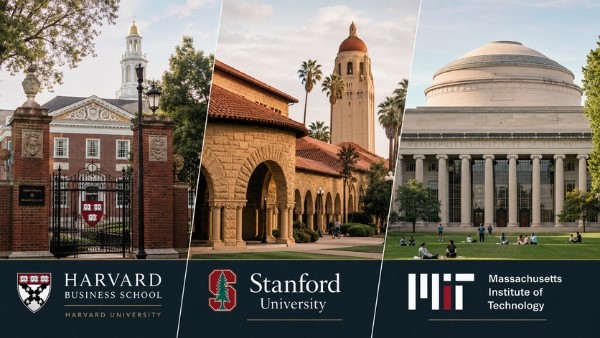
Boston-based Harvard University is one of the great options, as its reputation speaks for itself. Harvard graduates have the highest salaries upon graduation. It has 47, 000+ living MBA alumni. What makes it a part of the best finance schools in the world is its unique approach to teaching finance by using real-life examples. It's part of the Ivy League universities.
One thing people overlook about HBS: it's not purely a finance school. It's a leadership incubator that happens to have insane finance placement.
|
Key Facts |
Overview |
|
City |
Cambridge, Massachusetts |
|
Acceptance Rate |
4% |
|
Average tuition fee |
$55,000 - $$60,000 |
|
Year of establishment |
1636 |
|
Placement percentage |
61% |
Stanford University
Stanford Graduate School of Business has a 6.8% acceptance rate and 71% placement percentage. Thousands of brilliant students apply every year, and more than 93% of them don't get in. The bar is impossibly high. Yet, the demand never drops as it has stood tall for the past 150 years by educating students to live a life of purpose and leadership. It has a faculty of more than 2,000 and a student body of more than 17,000. Students can cross-register for courses in engineering, law, design, and medicine.
If your version of a finance career involves building something new, backing emerging companies, or working at the exact boundary of capital and technology, Stanford is your school.
Massachusetts Institute of Technology (MIT)
City: Cambridge, United States
Average Tuition Fee: $75,000 - $83,000
Acceptance Rate: 4%
Placement Percentage - 83.80%
For careers in trading, structured finance, fintech product strategy, or quantitative investing, MIT is one of the strongest choices anywhere. MIT is a centre for students who like finance with a strong analytical edge. If numbers, models, systems, and technology excite you, MIT is the best option for you.
In the QS 2026 Business Master’s Rankings for Finance, MIT ranks among the very best in the world. It scores strongly in areas like thought leadership, employability, and alumni outcomes. It has big-name alumni executives like Jamie Dimon and Sundar Pichai.
University of Oxford
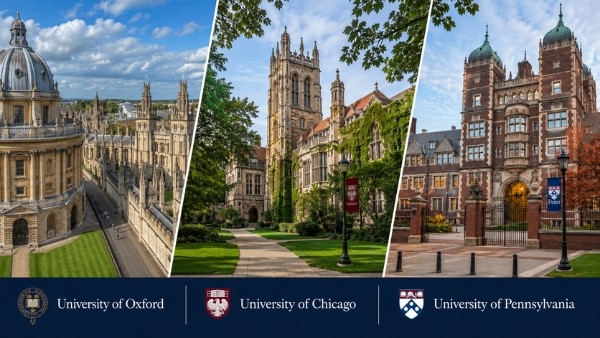
Oxford combines old-world prestige with very modern finance outcomes. There is something special about studying finance in a place with centuries of academic history while preparing for one of the most competitive global industries. With more than 26,000 students currently studying, this university is growing rapidly in terms of staff and students as well.
Oxford works well for students who want strong brand recognition across continents. It is especially useful if you plan to work in the UK, Europe, the Middle East, or other international finance hubs.
|
Key Facts |
Overview |
|
City |
Oxford, England |
|
Acceptance Rate |
17.5% |
|
Average tuition fee |
£33,050 - £48,620 |
|
Year of establishment |
1096 |
|
Placement percentage |
91% |
Want to explore more about Oxford? Take a closer look at the University of Oxford.
University of Chicago
If you love economics, rigorous thinking, and financial theory, Chicago should absolutely be on your list. The University of Chicago has long been one of the most respected names in economics and finance. With tough competition and a challenging 6.5% acceptance rate, this University is ranked as the #1 best school and #1 part-time MBA. It has one of the top master's programs in finance. The average tuition fee is from $63,801 - $63,801.
The school is especially strong for students interested in investment management, research, asset pricing, macro-finance, and quantitative roles. Chicago also benefits from a respected business community and a sharp, intellectually intense culture that many finance employers value.
University of Pennsylvania
Another one on our list of the best schools for finance is the Wharton School at the University of Pennsylvania. It offers strong training in corporate finance, investment banking, private equity, real estate, asset management, and entrepreneurship. It also has one of the strongest alumni networks in business.
It has strong recruiter attention, a practical business focus, and a long history of producing finance leaders. If you want a school that is deeply embedded in the finance industry, Wharton is a top-tier choice.
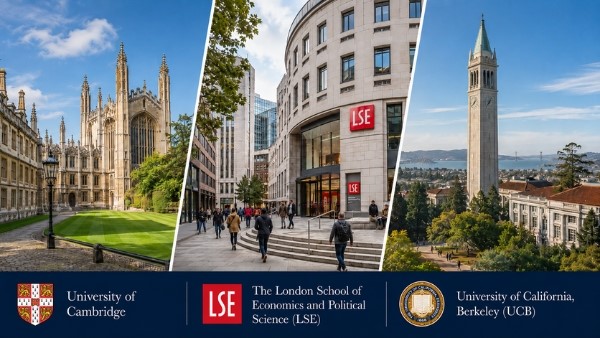
University of Cambridge
The University of Cambridge is known for its research programs and has a history of bringing change in society through its various ventures. That makes it especially attractive for students who want clear career value from their degree.
Cambridge works well for students seeking a respected international finance credential with exposure to both academic excellence and practical business thinking. It also benefits from proximity to London, which remains one of the world’s major financial centres.
The London School of Economics and Political Science (LSE)
LSE is almost tailor-made for finance students. It is globally known for economics, markets, policy, and social science, and it sits right in London, one of the biggest financial capitals in the world.
LSE’s location adds daily value. You are close to banks, asset managers, consultancies, regulators, and networking events. That means the learning does not stop in the classroom. For many students, that real-world exposure is one of the biggest selling points.
University of California, Berkeley (UCB)
UC Berkeley brings top academic quality together with innovation and West Coast energy. Through Berkeley Haas, the university has built a strong reputation in finance, especially where finance overlaps with technology, entrepreneurship, and analytics.
Berkeley is a smart choice for students interested in venture finance, fintech, corporate finance, sustainable finance, and data-heavy financial roles. It offers a different finance story than New York or London, and that is exactly why many students love it.
Common Admission Requirements: How Can You Get in:
- Academic Excellence: To get admission in top finance universities, you need top grades in school (A/A* or GPA 3.7+)
- Standardised Tests: For undergraduate programs, you need to give the SAT or ACT tests, and for master's programs, you need the GMAT or GRE entry test.
- Personal Statement: Most universities demand a personal statement to observe your personality. This is where you tell your story. Here, you need to tell why you want to study finance, your future goals, and how you think.
- Letters of Recommendation: To support your academic ability, you need at least 2 letters of recommendation from your professors.
- English Language Test: For some universities, it's essential to give proof of IELTS or TOEFL English language tests.
- Extracurricular Activities: Relevant work experience and participation in extracurricular activities like Finance clubs, internships, and competitions can have a high impact on your application.
Finance Degree Types: Which One Is Right for You?
There's no universal "best" finance degree; it completely depends on where you are in your career and where you want to go. Here's the honest breakdown:
1. Associate Degree in Finance
A two-year associate degree gives you foundational knowledge in financial principles, accounting basics, and business math. It's best for you to test whether finance is genuinely your path before a bigger commitment to entry-level banking and credit roles.
2. Bachelor's Degree in Finance
This is the standard baseline for most analyst positions at banks, investment firms, and corporations. Four years of curriculum typically cover corporate finance, investment theory, econometrics, financial modelling, and portfolio management.
3. Master's in Finance (MSF)
The Master's in Finance has become one of the most popular graduate degrees globally, and the demand keeps growing. According to the 2025 GMAC Prospective Student Survey, aspiring business school students ranked it as the most desirable program more than any other over the last decade.
This degree is built for:
- Recent undergrads who want to specialise without waiting 3–5 years for an MBA
- Professionals targeting roles in hedge funds, asset management, or financial engineering.
4. MBA with Finance Concentration
The MBA is the Swiss Army knife of graduate business education. It gives you finance depth plus strategy, leadership, operations, and the kind of broad business fluency that C-suite roles demand. Who should seriously consider this path:
- Professionals with 3–7 years of experience
- People targeting senior investment banking, private equity, or corporate development roles
- Anyone transitioning from technical or non-business roles into finance leadership
5. CFA and Professional Certifications
The Chartered Financial Analyst (CFA) designation isn't a degree. In certain corners of the finance world, it's more respected than one. It's recognised globally by asset managers, pension funds, and institutional investors who know exactly what passing three brutal exams actually means. But before you pursue it, know that it takes 2 to 5 years to pass all three CFA levels. Many finance professionals pursue CFA alongside their graduate degree.
Career Paths After Graduating from a Finance School
A degree from an elite finance program opens more doors than you realise. Here's a realistic look at where top graduates actually land:
|
Finance Career |
Necessary Degree |
Expected Salary |
|
Financial Analyst |
Bachelor’s in Finance, or Accounting (Master’s preferred) |
€46,000 – €69,000 |
|
Investment Banker |
Bachelor’s in Finance, Master’s or MBA strongly preferred |
€69,000 – €115,000+ |
|
Financial Advisor |
Bachelor’s in Finance, Business, or Economics |
€40,000 – €80,000+ |
|
Risk Manager |
Bachelor’s in Finance, (Master’s preferred) |
€58,000 – €92,000 |
|
Accountant |
Bachelor’s in Accounting or Finance; CPA/ACCA often required |
€35,000 – €58,000+ |
|
Compliance Officer |
Bachelor’s in Law, Finance, or Business (certifications helpful) |
€46,000 – €80,000 |
|
Fintech Specialist |
Bachelor’s in Computer Science, Finance, or Fintech |
€58,000 – €104,000+ |
Conclusion
The schools mentioned in this blog aren't just impressive. They can change your network and your earning potential. You have to pick the right one according to your preferences and also build an application strong enough to get you in. Start early.
If you're confused about how to make your application stand out, you can trust CounsellingX experts. From choosing the right universities to building a strong application, CounsellingX is on your back to handle it all. Let’s get you into a top university.
FAQs
Q: How competitive is admission to a top finance school?
Stanford's acceptance rate is ~6.8%, Harvard's is ~11.2%, and even Wharton (~18.6%) and MIT Sloan (~18.8%) are fiercely selective. Strong GMAT scores, relevant experience, and a compelling personal story are non-negotiable.
Q: What GMAT score do I actually need?
Most elite programs expect 700+. Harvard's enrolled students score in the 96th percentile. LSE MSc Finance admits typically score between 680 and 710. GRE is increasingly accepted, but GMAT is still preferred at most institutions.
Q: Can I get into a top finance school without a finance background?
Absolutely. LSE actively welcomes students from economics, mathematics, engineering, and physics. MIT Sloan's MFin is essentially built for STEM-trained candidates pivoting into finance. What matters most is demonstrating quantitative ability and a clear, compelling reason for wanting to enter the field.
Q: Which school is best for investment banking specifically?
In the US, Wharton, Harvard, and Columbia. In Europe: LSE and Cambridge Judge. These programs have the deepest relationships with bulge-bracket banks and the most established on-campus recruiting pipelines. The recruiter relationships alone make a meaningful difference.
Q: Are online finance degrees worth it?
For corporate finance, fintech, and financial planning roles, yes. On-campus recruiting, real-time alumni relationships, and the collaborative peer environment are genuinely hard to replicate through a screen.